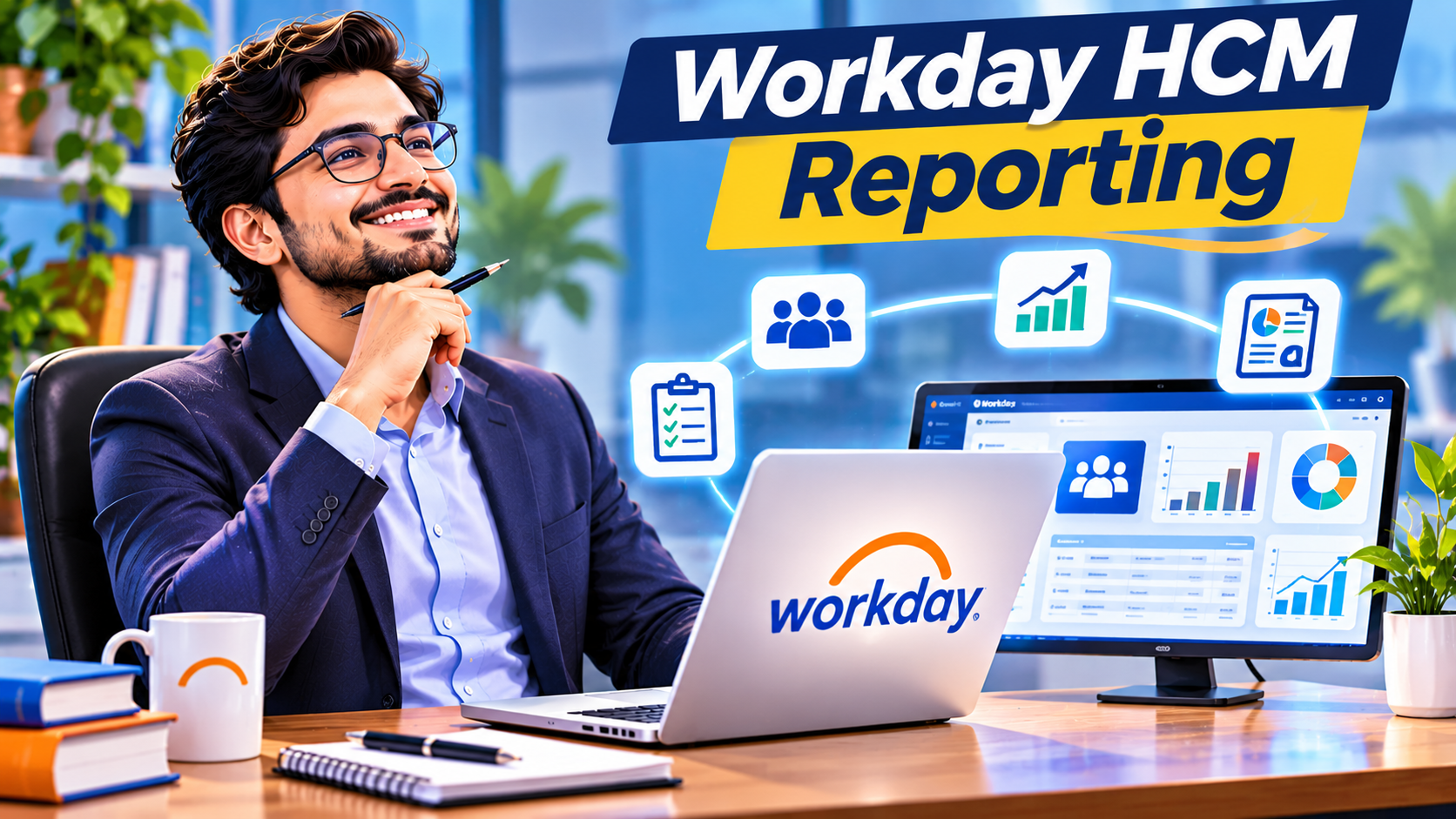
The HR technology industry is undergoing significant transformation as organizations increasingly adopt cloud-based platforms, automation, artificial intelligence, and data-driven workforce management solutions. Among the leading enterprise HR platforms, Workday has become an important solution for managing human resources, payroll, talent, and workforce analytics.
As businesses generate larger volumes of employee data, the demand for accurate reporting and meaningful workforce insights continues to grow. Workday Reporting professionals play an important role in helping organizations convert complex HR data into actionable business information.
The future of Workday Reporting jobs looks promising, with opportunities expanding across reporting, HR analytics, consulting, system administration, and enterprise technology management.
1. Growing Demand for Workday Reporting Professionals
Organizations are increasingly investing in HR technology to streamline employee management and improve operational efficiency. Workday Reporting helps HR departments access important information related to recruitment, employee performance, compensation, payroll, and workforce planning.
Companies require skilled professionals who can develop customized reports, maintain reporting structures, and provide accurate insights to business leaders.
Some growing job roles include:
- Workday Reporting Analyst
- Workday Reporting Consultant
- Workday HCM Analyst
- Workday HRIS Analyst
- Workday Technical Consultant
- Workday People Analytics Specialist
2. Artificial Intelligence and Automation in Workday Reporting
Artificial intelligence and automation are changing how organizations manage and analyze HR information.
Modern HR technology is moving toward automated reporting processes, intelligent analytics, and predictive insights. These developments can reduce repetitive reporting activities and help HR teams make faster decisions.
Workday Reporting professionals will increasingly need to understand how automation and AI-powered capabilities support:
- Automated HR reporting.
- Employee performance analysis.
- Workforce trend identification.
- Recruitment analytics.
- Employee retention forecasting.
- Data-driven workforce planning.
Professionals who combine Workday expertise with knowledge of AI and analytics may find additional career opportunities.
3. Increasing Importance of People Analytics
People Analytics is becoming an important part of strategic HR management. Organizations are no longer using employee data only for administrative purposes. They are using workforce insights to improve productivity, employee engagement, and talent management.
Workday Reporting professionals can contribute by developing dashboards and reports that help organizations understand:
- Employee turnover and retention.
- Recruitment performance.
- Workforce diversity metrics.
- Employee productivity.
- Training and development effectiveness.
- Compensation and workforce costs.
This shift is creating opportunities for professionals interested in combining HR knowledge with data analysis.
4. Career Opportunities in Workday Reporting
As Workday adoption continues across industries, professionals can explore several career paths depending on their technical and functional expertise.
Workday Reporting Analyst
Reporting Analysts develop customized reports, manage reporting requirements, and ensure the accuracy of HR information.
Workday Reporting Consultant
Reporting Consultants work with businesses to understand reporting requirements, configure reporting solutions, and improve existing reporting processes.
Workday HCM Functional Consultant
These professionals specialize in Workday HCM modules and support organizations in managing employee lifecycle processes and HR operations.
Workday People Analytics Specialist
People Analytics Specialists analyze workforce data and develop dashboards to support strategic business decisions.
Workday Technical Consultant
Technical Consultants work on advanced reporting requirements, integrations, calculated fields, and other technical aspects of Workday solutions.
5. Essential Skills for Future Workday Reporting Jobs
The future HR technology industry will require professionals with a combination of technical, analytical, and business skills.
Important skills include:
- Workday Report Writer: Understanding custom, advanced, matrix, and composite reports.
- Calculated Fields: Creating calculated fields for complex reporting requirements.
- Workday HCM Modules: Knowledge of Core HCM, Compensation, Absence, Benefits, and Talent Management.
- Data Analysis: Interpreting workforce information and identifying trends.
- Dashboard Development: Creating meaningful reports and visual presentations.
- Workday Security: Understanding reporting access and role-based security.
- Excel and Data Management: Managing large datasets and performing data analysis.
- Communication Skills: Translating business requirements into effective reporting solutions.
Knowledge of integrations, data visualization, and analytics tools can also provide an additional advantage.
6. Industries Creating Workday Reporting Opportunities
Workday Reporting skills are valuable across industries where organizations manage large workforces and complex HR operations.
Major hiring sectors include:
- Information Technology and IT Services
- Banking and Financial Services
- Healthcare and Pharmaceuticals
- Retail and E-commerce
- Manufacturing
- Telecommunications
- Consulting and Professional Services
- Education and Research
Large enterprises and multinational organizations are particularly interested in improving HR data management and reporting capabilities.
7. How to Prepare for the Future of Workday Reporting
Professionals who want to build a long-term career in Workday Reporting should continuously upgrade their technical and functional knowledge.
Here are some important steps:
- Develop a strong understanding of Workday HCM fundamentals.
- Learn Workday Report Writer and calculated fields.
- Gain practical experience with different reporting types.
- Understand HR business processes and employee lifecycle management.
- Improve analytical and data interpretation skills.
- Learn about Workday security and reporting access.
- Develop knowledge of automation, integrations, and people analytics.
Continuous learning and practical project experience can help professionals remain competitive in the evolving HR technology industry.
Conclusion
The future of Workday Reporting jobs in the HR technology industry is closely connected to the growing importance of workforce analytics, automation, cloud-based HR solutions, and data-driven decision-making.
As organizations continue to modernize their HR operations, professionals with expertise in Workday Reporting, HCM functionalities, calculated fields, and data analytics can explore diverse career opportunities.
For aspiring professionals and experienced HR technology specialists, developing advanced reporting capabilities and adapting to emerging technologies can create valuable opportunities for long-term career growth.