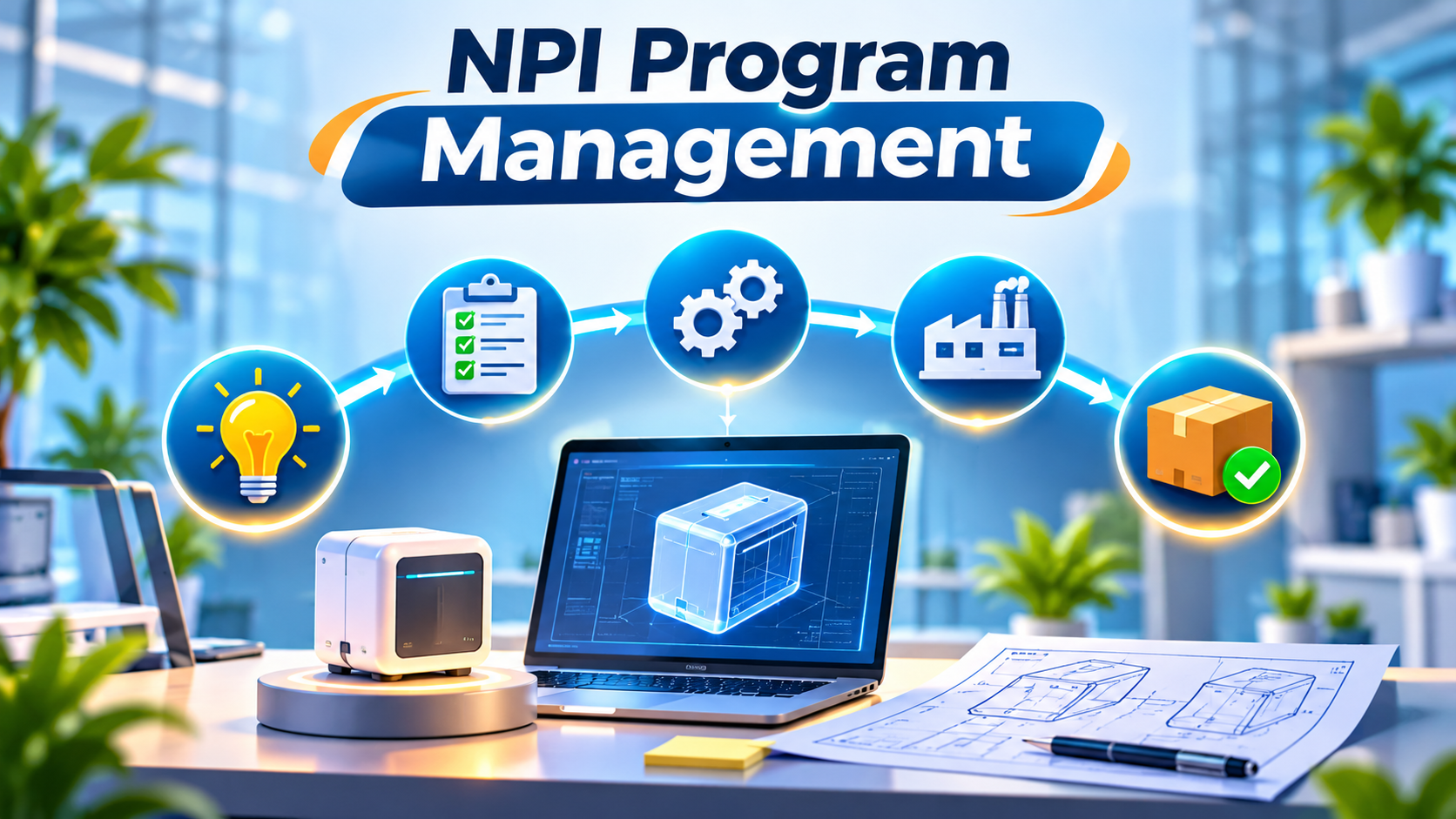
New Product Introduction (NPI) is an important business function that helps organizations transform product concepts and designs into commercially viable products. It involves multiple stages, including product planning, engineering development, prototype testing, manufacturing preparation, quality validation, and final product launch.
A New Product Introduction Associate Manager plays a significant role in coordinating these activities and ensuring that new products move smoothly from development to production. The position requires a combination of program management, technical knowledge, operational planning, and cross-functional leadership.
Organizations across manufacturing, automotive, electronics, consumer goods, healthcare, and technology industries depend on experienced NPI professionals to accelerate product launches, maintain quality standards, and achieve business objectives.
Who Is a New Product Introduction Associate Manager?
An NPI Associate Manager oversees product introduction programs and coordinates different teams involved in product development and commercialization.
The professional works closely with engineering, manufacturing, procurement, supply chain, quality assurance, finance, and business stakeholders.
The primary objective is to ensure that products are developed according to specifications, production processes are ready, and launches are completed within established timelines and budgets.
Key Roles and Responsibilities of an NPI Associate Manager
1. Managing New Product Introduction Programs
One of the primary responsibilities is managing NPI programs from initial planning through production launch.
Key activities include:
- Defining project scope and objectives.
- Preparing product introduction roadmaps.
- Establishing project milestones and timelines.
- Monitoring development progress.
- Coordinating project resources.
- Tracking deliverables and dependencies.
- Ensuring timely completion of program activities.
The associate manager ensures that all teams remain aligned with the overall product development strategy.
2. Coordinating Product Development Activities
NPI Associate Managers work closely with product design and engineering teams to ensure that product development activities meet business and technical requirements.
Responsibilities include reviewing product specifications, monitoring design progress, coordinating engineering changes, and supporting prototype development.
They also ensure that technical challenges are communicated to the relevant stakeholders and resolved efficiently.
3. Managing Manufacturing Readiness
Manufacturing readiness is a critical stage in the NPI process. Before commercial production begins, organizations must ensure that manufacturing facilities, equipment, materials, and production processes are prepared.
An NPI Associate Manager coordinates:
- Production planning and scheduling.
- Manufacturing process validation.
- Equipment and tooling readiness.
- Supplier and material availability.
- Production capacity assessments.
- Workforce and operational readiness.
- Production documentation.
Effective manufacturing readiness reduces production delays and supports a smooth transition from product development to large-scale manufacturing.
4. Ensuring Product Quality and Compliance
Product quality is essential for successful commercialization. NPI Associate Managers work with quality assurance and engineering teams to establish appropriate testing and validation procedures.
Their responsibilities include monitoring product testing, reviewing quality reports, tracking defects, coordinating corrective actions, and ensuring compliance with applicable industry standards.
They also support product validation activities to confirm that products meet technical specifications and customer expectations.
5. Managing Cross-Functional Stakeholders
NPI programs involve several departments with different priorities and responsibilities.
An Associate Manager acts as a coordination point between engineering, manufacturing, procurement, supply chain, quality, and finance teams.
Key activities include:
- Conducting project review meetings.
- Communicating program updates.
- Resolving interdepartmental issues.
- Tracking action items.
- Managing stakeholder expectations.
- Escalating critical project risks.
Strong stakeholder management ensures effective collaboration and faster decision-making.
6. Monitoring Project Budgets and Resources
Managing costs and resources is another important responsibility.
NPI Associate Managers monitor project expenses, development costs, resource utilization, and manufacturing-related investments.
They work with finance and business teams to identify cost variations, evaluate resource requirements, and ensure that programs remain aligned with approved budgets.
Cost optimization without compromising product quality is an important objective.
7. Identifying and Managing Program Risks
New product development involves several potential risks, including design issues, supplier delays, material shortages, manufacturing challenges, and quality failures.
An NPI Associate Manager identifies these risks and develops mitigation plans.
Regular risk assessments, project tracking, contingency planning, and timely escalation help minimize disruptions and improve launch readiness.
8. Driving Process Improvement and Operational Excellence
NPI professionals continuously look for opportunities to improve product introduction processes.
They may introduce standardized project management practices, improve reporting procedures, reduce development cycle times, and streamline communication between teams.
Knowledge of Lean Manufacturing, Six Sigma, Agile methodologies, and continuous improvement practices can help improve operational efficiency.
Essential Skills Required for an NPI Associate Manager
Professionals aspiring to this role need technical, managerial, and analytical capabilities.
Important skills include:
- New Product Introduction (NPI) management.
- Product lifecycle development.
- Program and project management.
- Product engineering fundamentals.
- Manufacturing process knowledge.
- Supply chain and procurement coordination.
- Quality assurance and product validation.
- Risk and budget management.
- Cross-functional team leadership.
- Stakeholder communication.
- Data analysis and performance reporting.
- Problem-solving and decision-making.
Knowledge of Product Lifecycle Management (PLM) platforms, ERP systems, and project management tools is also beneficial.
Role of Technology in New Product Introduction
Technology is changing how organizations manage product development and manufacturing operations.
Modern PLM platforms such as Siemens Teamcenter and PTC Windchill help manage product specifications, engineering documentation, design changes, and product information.
ERP platforms such as SAP and Oracle support material planning, procurement, inventory management, and manufacturing operations.
Organizations are also adopting artificial intelligence, automation, digital twins, and predictive analytics to improve product design, identify production risks, and accelerate product launches.
An NPI Associate Manager with digital transformation knowledge can help organizations implement more efficient and data-driven product introduction processes.
Key Performance Indicators for NPI Associate Managers
Organizations use Key Performance Indicators (KPIs) to measure the success of NPI programs.
| KPI | Purpose |
|---|---|
| Time to Market | Measures product development and launch speed |
| Project Milestone Achievement | Tracks completion of planned activities |
| New Product Quality | Measures defects and quality performance |
| Launch Readiness | Evaluates preparedness for commercial production |
| Development Cost | Monitors product development expenses |
| Production Yield | Measures manufacturing efficiency |
| Schedule Adherence | Tracks compliance with project timelines |
| Risk Resolution Rate | Measures effectiveness of risk management |
Monitoring these indicators helps management identify delays, improve execution, and maintain product development standards.
Career Opportunities and Industry Demand
New Product Introduction Associate Managers can find opportunities across several industries, including:
- Automotive and electric vehicles.
- Electronics and semiconductor manufacturing.
- Consumer electronics.
- Industrial manufacturing.
- Healthcare and medical devices.
- Aerospace and engineering.
- Consumer goods and retail.
With experience, professionals can progress into senior management and leadership positions such as:
- NPI Manager.
- Senior NPI Program Manager.
- Product Development Manager.
- Engineering Program Manager.
- Manufacturing Operations Manager.
- Product Lifecycle Manager.
- Director of Product Development.
Organizations with global engineering and manufacturing operations increasingly value professionals who can manage complex product introduction programs across multiple locations.
Conclusion
A New Product Introduction Associate Manager plays an important role in ensuring the successful development, validation, manufacturing, and launch of new products.
From coordinating engineering activities and managing manufacturing readiness to monitoring budgets, quality, and project timelines, the position requires strong program management and cross-functional leadership skills.
As businesses continue investing in product innovation, manufacturing efficiency, and digital transformation, NPI professionals will remain essential to successful product lifecycle management and sustainable business growth.