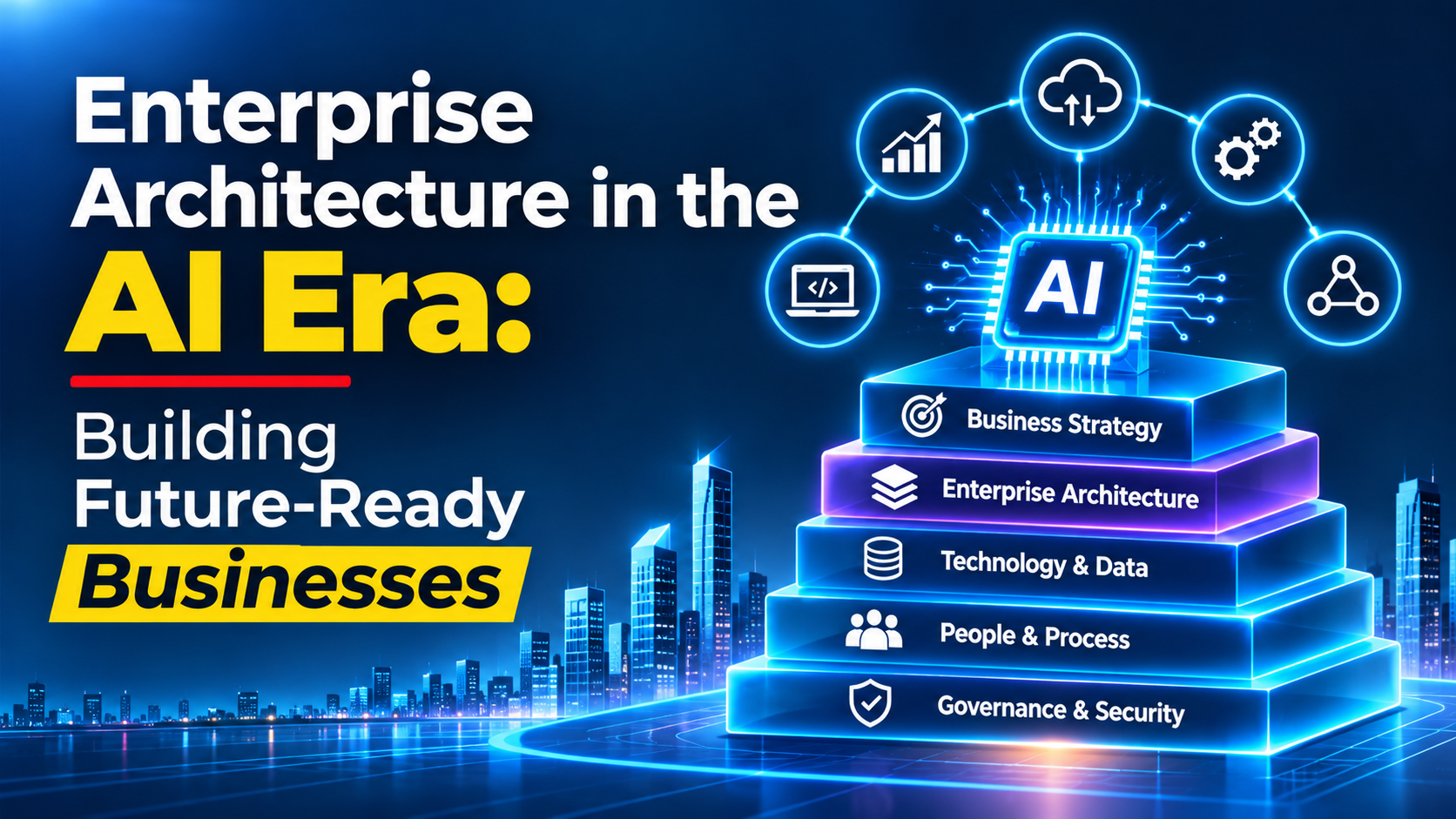
Artificial Intelligence (AI) is transforming the way businesses operate, compete, and grow. From automating daily operations to improving customer experiences, AI is becoming a key driver of modern enterprise transformation.
Today, organizations are moving beyond traditional technology strategies and adopting AI-led approaches to improve productivity, reduce operational costs, and unlock new business opportunities.
AI-led enterprise reinvention is not just about adopting new technology. It is about transforming business strategies, processes, and organizational capabilities to achieve sustainable growth.
1. The Growing Role of AI in Enterprise Transformation
AI is helping businesses make faster and smarter decisions by analyzing large amounts of data and identifying valuable insights.
Organizations are using AI across multiple business functions, including:
- Customer service and intelligent chatbots.
- Sales forecasting and market analysis.
- Automated business operations.
- Fraud detection and risk management.
- Supply chain and inventory optimization.
- Personalized marketing and customer engagement.
By integrating AI into business operations, enterprises can improve efficiency and deliver better results.
2. Transforming Technology Strategy with AI
Traditional IT strategies often focus on infrastructure, software, and system maintenance. However, modern businesses need technology strategies that directly support business objectives.
AI can help organizations build smarter technology ecosystems through:
Intelligent Automation: Automating repetitive tasks to save time and resources.
Data-Driven Decision Making: Using AI-powered analytics to identify trends and improve strategic planning.
Cloud and AI Integration: Combining cloud computing with AI to improve scalability and flexibility.
Predictive Analytics: Forecasting customer demand, business performance, and potential risks.
3. AI and Business Growth
AI creates opportunities for businesses to grow by improving operational performance and identifying new revenue opportunities.
Some major business benefits include:
- Increased employee productivity.
- Improved customer satisfaction.
- Faster decision-making.
- Reduced operational expenses.
- Better resource utilization.
- New products and service opportunities.
Companies that successfully integrate AI into their business strategies can become more competitive in an increasingly digital marketplace.
4. Challenges in AI Adoption
Despite its benefits, implementing AI across an enterprise comes with challenges.
Some common challenges include:
- Data privacy and cybersecurity concerns.
- High initial implementation costs.
- Shortage of skilled AI professionals.
- Integration with existing technology systems.
- Employee training and organizational resistance.
- Responsible AI governance.
Businesses must develop a clear implementation strategy to address these challenges and ensure successful adoption.
5. Building an AI-Ready Enterprise
Successful AI transformation requires more than investing in technology. Organizations need a structured approach.
Key steps include:
- Identify business challenges that AI can solve.
- Develop a clear AI adoption roadmap.
- Invest in secure and scalable technology infrastructure.
- Train employees to work with AI-powered tools.
- Establish data governance and security policies.
- Measure performance and continuously improve AI solutions.
A well-planned strategy helps businesses achieve meaningful results while minimizing implementation risks.
6. The Future of AI-Led Enterprise Reinvention
The future of business will increasingly depend on intelligent technologies, automation, and data-driven strategies.
Generative AI, machine learning, intelligent agents, and predictive analytics will continue to reshape industries.
Organizations that embrace responsible AI adoption and align technology investments with business goals will be better positioned to respond to changing market conditions.
Conclusion
AI-led enterprise reinvention represents a major shift in how businesses approach technology and growth.
By combining artificial intelligence, modern technology infrastructure, skilled employees, and strategic leadership, organizations can create more efficient, innovative, and competitive business models.
The real opportunity is not simply adopting AI but using it to rethink how the entire enterprise operates and creates value.
AI is no longer just a technology investment; it is becoming a strategic driver of enterprise growth.