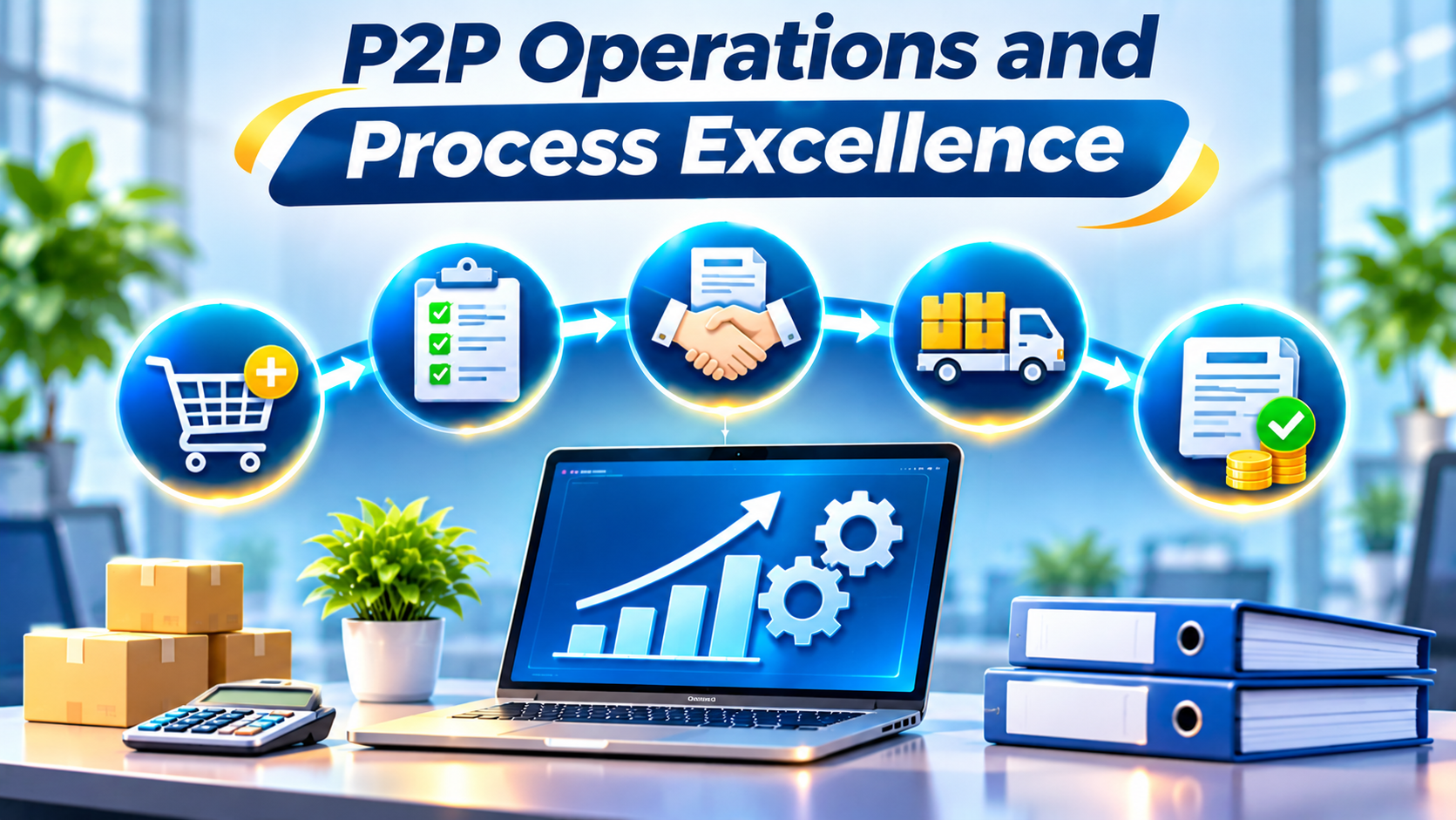
Procure to Pay (P2P) is a critical business process that manages the complete purchasing cycle, starting from identifying organizational requirements and creating purchase requests to processing supplier invoices and making payments. It connects procurement, finance, accounts payable, and supply chain operations to ensure that businesses acquire goods and services efficiently.
A Procure to Pay (P2P) Process Lead plays an important role in managing and optimizing these activities. The professional oversees procurement operations, ensures timely invoice processing, manages vendor relationships, monitors payment activities, and drives continuous process improvements.
With organizations increasingly focusing on procurement efficiency, cost optimization, automation, and financial control, the demand for experienced P2P professionals is growing across multinational companies, shared service centers, and Global Capability Centers (GCCs).
Who Is a Procure to Pay Process Lead?
A P2P Process Lead is responsible for supervising the end-to-end procurement and accounts payable process. The role involves managing operational performance, coordinating with internal stakeholders, resolving process-related issues, and ensuring compliance with organizational procurement policies.
The professional acts as a bridge between procurement teams, finance departments, suppliers, business units, and senior management.
The primary objective is to establish an efficient purchasing and payment process while maintaining cost control, transparency, and supplier satisfaction.
Key Roles and Responsibilities of a P2P Process Lead
1. Managing End-to-End Procure to Pay Operations
One of the primary responsibilities is overseeing the complete P2P lifecycle.
This includes:
- Managing purchase requisitions.
- Coordinating purchase order creation.
- Monitoring goods and services receipts.
- Supervising invoice processing.
- Managing invoice verification and approvals.
- Monitoring payment execution.
- Resolving procurement and payment discrepancies.
The P2P Process Lead ensures that every activity is completed according to established timelines and business requirements.
2. Managing Procurement and Purchase Order Activities
Procurement management is an important component of the P2P process. The process lead ensures that purchasing activities follow approved procurement policies and authorization procedures.
Key responsibilities include monitoring purchase orders, coordinating with procurement teams, reviewing purchasing exceptions, and ensuring appropriate approvals.
The professional also works to improve purchasing efficiency and prevent unauthorized or duplicate procurement activities.
3. Overseeing Accounts Payable and Invoice Processing
Accounts payable operations are closely connected with the P2P function.
A P2P Process Lead monitors invoice receipt, validation, matching, approval, and posting activities.
Important responsibilities include:
- Monitoring invoice processing turnaround time.
- Ensuring accurate invoice validation.
- Managing two-way and three-way matching.
- Resolving invoice discrepancies.
- Monitoring blocked and overdue invoices.
- Reducing duplicate invoice payments.
- Ensuring accurate accounting entries.
Efficient invoice management helps organizations maintain financial accuracy and avoid unnecessary payment delays.
4. Vendor Management and Supplier Relationships
Maintaining strong supplier relationships is essential for effective procurement operations.
The P2P Process Lead coordinates with vendors to resolve invoice disputes, payment queries, documentation issues, and purchase order discrepancies.
Responsibilities include monitoring supplier performance, managing escalations, supporting vendor onboarding, and improving communication between suppliers and internal teams.
A well-managed vendor relationship contributes to better service delivery and procurement efficiency.
5. Managing Payment Processing and Working Capital
Timely and accurate supplier payments are important for maintaining business continuity and financial stability.
The P2P Process Lead works with treasury and finance teams to monitor payment schedules, resolve payment exceptions, and ensure compliance with agreed payment terms.
The professional also supports working capital optimization by identifying opportunities to improve payment cycles, reduce overdue invoices, and manage early payment discounts where commercially beneficial.
6. Ensuring Compliance and Internal Controls
Procurement and payment activities must follow organizational policies, financial regulations, and internal control requirements.
A P2P Process Lead ensures compliance with:
- Procurement approval policies.
- Delegation of authority.
- Segregation of duties.
- Supplier verification procedures.
- Invoice approval controls.
- Audit documentation requirements.
- Anti-fraud and duplicate payment controls.
The role also involves supporting internal and external audits and ensuring that procurement records are properly maintained.
7. Driving Process Excellence and Continuous Improvement
Process optimization is a major responsibility of a P2P Process Lead.
The professional identifies operational bottlenecks, evaluates process performance, and implements improvements to reduce manual effort and improve service quality.
Common improvement initiatives include:
- Reducing invoice processing backlogs.
- Improving purchase order compliance.
- Increasing automated invoice processing.
- Reducing supplier query resolution time.
- Standardizing procurement workflows.
- Improving exception management.
- Implementing process performance dashboards.
Knowledge of Lean, Six Sigma, and continuous improvement methodologies can help achieve measurable operational improvements.
8. Team Leadership and Stakeholder Management
A P2P Process Lead supervises procurement and accounts payable professionals and ensures that daily activities are completed efficiently.
Key responsibilities include allocating workloads, monitoring team performance, conducting training sessions, resolving escalations, and supporting employee development.
The professional also collaborates with procurement managers, finance controllers, business stakeholders, suppliers, and technology teams.
Essential Skills Required for a P2P Process Lead
Professionals working in P2P leadership roles require a combination of procurement knowledge, financial expertise, analytical capabilities, and people management skills.
Important skills include:
- End-to-end Procure to Pay process knowledge.
- Procurement and sourcing operations.
- Accounts Payable management.
- Purchase order management.
- Invoice processing and validation.
- Two-way and three-way matching.
- Vendor and supplier management.
- Payment processing and working capital.
- Financial controls and compliance.
- SAP, Oracle, and other ERP systems.
- SAP Ariba and procurement platforms.
- Advanced Microsoft Excel and reporting.
- Process improvement and automation.
- Stakeholder and team management.
Strong communication, problem-solving, and decision-making abilities are also essential.
Technology and Automation in P2P Operations
Digital transformation is changing traditional procurement and accounts payable operations. Organizations are adopting automation tools and cloud-based procurement platforms to improve efficiency, accuracy, and transparency.
Some widely used enterprise solutions include:
- SAP S/4HANA: Supports procurement, purchasing, invoice management, and financial integration.
- SAP Ariba: Helps manage sourcing, supplier collaboration, and procurement activities.
- Oracle Fusion Cloud Procurement: Supports purchasing, supplier management, and procurement workflows.
- Coupa: Provides spend management and procurement automation capabilities.
- Basware: Supports electronic invoicing and accounts payable automation.
Artificial intelligence and intelligent automation are also being used for invoice data extraction, exception identification, duplicate invoice detection, and supplier query management.
P2P Process Leads who understand these technologies can contribute to finance transformation and procurement modernization initiatives.
Key Performance Indicators for P2P Process Leads
Organizations use KPIs to evaluate the performance of procurement and accounts payable operations.
| KPI | Business Importance |
|---|---|
| Invoice Processing Cycle Time | Measures invoice processing efficiency |
| First-Time Match Rate | Tracks accurate invoice matching |
| Purchase Order Compliance | Measures adherence to purchasing policies |
| Cost per Invoice | Evaluates processing costs |
| On-Time Payment Rate | Tracks timely supplier payments |
| Duplicate Payment Rate | Measures payment control effectiveness |
| Supplier Query Resolution Time | Evaluates vendor support efficiency |
| Invoice Exception Rate | Identifies process bottlenecks |
| Automation Rate | Measures adoption of automated processes |
Regular KPI monitoring helps organizations identify inefficiencies and improve overall P2P performance.
Career Opportunities for P2P Process Leads
P2P professionals have career opportunities across multinational corporations, consulting firms, shared service centers, and Global Capability Centers.
With relevant experience and leadership capabilities, professionals can progress into roles such as:
- P2P Assistant Manager.
- P2P Manager.
- Procurement Operations Manager.
- Accounts Payable Manager.
- Global Process Owner – P2P.
- Procurement Transformation Manager.
- Source-to-Pay Manager.
- Finance Operations Manager.
- Director of Procurement Operations.
Experience in ERP implementation, procurement automation, supplier management, and global process transformation can further strengthen career prospects.
Conclusion
A Procure to Pay (P2P) Process Lead plays a vital role in ensuring efficient procurement, accurate invoice processing, timely supplier payments, and strong financial controls.
From managing purchase orders and vendor relationships to driving automation and continuous improvement, the position requires a broad understanding of procurement and finance operations.
As organizations continue investing in digital procurement, intelligent automation, and Global Capability Centers, skilled P2P professionals will remain important in building efficient, transparent, and cost-effective business operations.