The rapid advancement of artificial intelligence is changing how organizations operate, make decisions, and manage their workforce. Human Resources (HR), traditionally focused on recruitment, employee administration, payroll coordination, and talent management, is evolving into a strategic business function powered by AI, automation, and data-driven insights.
An AI-first enterprise does not simply introduce AI tools into existing processes. It redesigns business operations, workflows, employee experiences, and decision-making around the effective use of AI. For HR, this means reimagining the operating model to improve efficiency, strengthen workforce capabilities, and align people strategies with business objectives.
As organizations adopt generative AI, intelligent automation, predictive analytics, and Agentic AI, HR leaders have an opportunity to build a more agile, scalable, and employee-centered operating model.
What Is an AI-First HR Operating Model?
An AI-first HR operating model is a framework that integrates artificial intelligence into HR processes, organizational structures, service delivery, governance, and workforce decision-making.
Traditional HR operating models often divide responsibilities among HR business partners, centers of excellence (CoEs), and shared services teams. While this structure supports specialization, many processes still depend on manual coordination, disconnected systems, and repetitive administrative work.
An AI-first model enhances this structure by integrating intelligent technologies into everyday HR activities. AI can support employee inquiries, automate workflows, analyze workforce data, personalize learning recommendations, and help HR professionals make better-informed decisions.
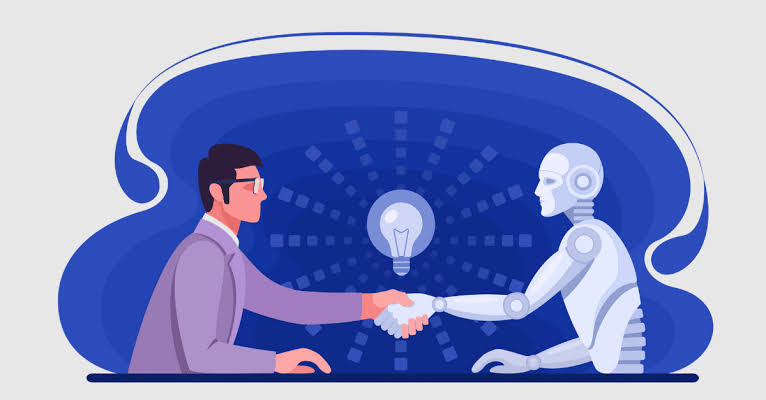
The objective is not to remove the human element from HR. Instead, it is to combine technology-driven efficiency with human judgment, empathy, and strategic leadership.
Why Enterprises Need to Rethink the HR Operating Model
Several business trends are accelerating the need for HR transformation.
Rapid technological change: Organizations need new skills to adopt AI, cloud computing, automation, and advanced analytics.
Increasing employee expectations: Employees expect convenient, personalized, and responsive HR services similar to their experiences with digital consumer platforms.
Pressure to improve productivity: HR teams must deliver reliable services while managing costs and increasing business complexity.
Growing demand for workforce insights: Business leaders need better visibility into employee capabilities, talent gaps, productivity, and workforce requirements.
Changing organizational structures: Hybrid work, global teams, skills-based hiring, and project-based work require more flexible workforce management.
An AI-first HR operating model helps organizations respond to these challenges by connecting people strategy with digital capabilities and business outcomes.
Key Components of an AI-First HR Operating Model
1. AI-Powered HR Service Delivery
HR service delivery is one of the most promising areas for AI adoption. Employees regularly need information about leave policies, payroll, benefits, attendance, reimbursements, and internal procedures.
AI assistants can answer routine questions, retrieve approved policy information, and guide employees through standard processes. More advanced AI agents can coordinate multistep workflows, such as preparing onboarding checklists, routing requests, and tracking pending tasks.
A modern HR service delivery model may include:
- AI-powered employee self-service.
- Automated HR case classification and routing.
- Intelligent knowledge management.
- Workflow automation and task tracking.
- Human escalation for complex or sensitive issues.
This approach can reduce administrative workloads while allowing HR professionals to focus on cases requiring personal attention and professional judgment.
2. Redesigning HR Business Partner Roles
HR business partners (HRBPs) connect workforce strategy with business objectives. In an AI-first enterprise, their responsibilities can expand beyond routine reporting and operational coordination.
AI tools can help HRBPs analyze workforce trends, identify skill shortages, prepare organizational insights, and evaluate potential workforce scenarios.
For example, an HRBP supporting a business unit expanding its AI services could use workforce analytics to understand existing employee capabilities, identify future talent requirements, and recommend reskilling or recruitment strategies.
The HRBP remains responsible for interpreting these insights, consulting business leaders, considering organizational context, and recommending appropriate actions.
This evolution strengthens HR’s role as a strategic partner rather than simply an administrative support function.
3. Transforming Centers of Excellence
HR Centers of Excellence specialize in areas such as talent acquisition, compensation and benefits, learning and development, organizational design, and talent management.
AI can help these teams deliver more personalized and data-driven services.
In talent acquisition, AI may support candidate sourcing, application organization, and interview scheduling. Learning teams can use AI to develop training content and recommend learning pathways. Compensation teams can analyze pay structures and identify potential inconsistencies for further review.
Centers of Excellence should also establish reusable AI standards, approved tools, governance frameworks, and best practices across the organization.
This reduces duplication and promotes consistent HR practices across business units.
4. Building an AI-Enabled HR Shared Services Function
HR shared services teams manage high-volume transactions and employee requests. These activities are well suited to process standardization, automation, and intelligent assistance.
An AI-enabled shared services function can combine employee self-service, workflow automation, knowledge retrieval, and case management.
For example, when an employee submits a benefits-related query, an AI system may identify the request category, retrieve the relevant policy, prepare a response, and route exceptions to a specialist.
The operating model should clearly distinguish between tasks that can be automated, tasks requiring employee confirmation, and decisions that must remain with authorized HR professionals.
Performance can be measured through service resolution time, first-contact resolution, process accuracy, employee satisfaction, and compliance.
5. Skills-Based Workforce Planning
An AI-first enterprise requires a workforce strategy that evolves alongside business needs.
Traditional workforce planning often emphasizes job titles, headcount, and historical staffing patterns. A skills-based model focuses more directly on employee capabilities, transferable skills, emerging competencies, and future business requirements.
AI-powered workforce analytics can help organizations map existing skills, identify capability gaps, and explore opportunities for internal mobility.
For example, employees with strong analytical or financial process skills may be suitable candidates for training in AI-enabled reporting, process automation, or workforce analytics.
HR leaders can use these insights to develop reskilling programs, improve internal talent mobility, and reduce unnecessary external recruitment.
AI recommendations should be validated for accuracy and fairness, particularly when they affect career opportunities or employment decisions.
The Role of Agentic AI in HR Operations
Agentic AI introduces another dimension to HR transformation. Unlike systems that only generate information or recommendations, AI agents can potentially plan and execute sequences of authorized actions using connected business applications.
For example, an onboarding agent could coordinate document collection, initiate approved IT requests, assign learning modules, and monitor completion status.
A recruitment operations agent might assist with interview scheduling, candidate communication, and workflow updates.
Multiple agents could eventually coordinate across different HR functions, enabling more integrated service delivery.
However, these capabilities require reliable system integrations, carefully defined permissions, audit trails, and human approval for sensitive or high-impact decisions.
Data, Technology, and AI Governance
A successful AI-first HR operating model depends on more than selecting AI software. Organizations need a reliable technology foundation and clear governance.
Integrated HR Technology
HR systems should support secure data exchange between human capital management platforms, recruitment software, payroll applications, learning systems, and employee service platforms.
Integration helps reduce fragmented information and enables more consistent workflows.
Responsible AI Governance
HR leaders must establish rules for data access, algorithmic testing, human oversight, transparency, and accountability.
AI systems used in recruitment, performance evaluation, promotion, compensation, or termination require particular care because errors and bias can have significant consequences.
Employees should understand how AI is used in relevant HR processes and have appropriate channels to raise concerns or request human review.
Data Privacy and Security
Employee information must be protected through role-based access, secure integrations, data minimization, retention controls, and regular security assessments.
Governance should be incorporated into the design of HR processes rather than added after implementation.
How to Implement an AI-First HR Operating Model
Organizations can follow a phased approach to transformation.
- Assess the existing operating model: Identify manual processes, fragmented systems, service bottlenecks, and workforce challenges.
- Define the AI-first vision: Establish measurable goals linked to employee experience, operational efficiency, workforce agility, and business performance.
- Prioritize high-value use cases: Begin with manageable applications such as HR knowledge assistants, case routing, onboarding coordination, and learning recommendations.
- Redesign processes: Simplify workflows before automating them. Avoid using AI to reproduce unnecessary complexity.
- Build the technology foundation: Improve data quality, integrate HR platforms, and establish secure access controls.
- Redefine roles and responsibilities: Clarify how HRBPs, Centers of Excellence, shared services, IT, and AI specialists will collaborate.
- Develop employee capabilities: Train HR professionals in AI literacy, analytics, governance, and change management.
- Measure and improve: Evaluate results, address risks, gather employee feedback, and expand successful use cases.
Measuring the Success of AI-First HR Transformation
Organizations should measure outcomes rather than focusing only on the number of AI tools deployed.
Useful performance indicators include:
- HR service resolution time.
- Cost per HR transaction.
- Employee satisfaction with HR services.
- Recruitment cycle time and candidate experience.
- Onboarding task completion rates.
- Internal mobility and reskilling participation.
- HR process accuracy and compliance.
- AI-related errors, escalations, and governance incidents.
Establishing baseline measurements before implementation helps organizations determine whether AI initiatives deliver meaningful improvements.
Conclusion
Reimagining the HR operating model for an AI-first enterprise requires a fundamental shift in how HR delivers services, supports business leaders, develops talent, and manages workforce information.
AI-powered service delivery, strategic HR business partnering, intelligent shared services, skills-based workforce planning, and Agentic AI can help organizations build a more responsive and scalable HR function.
However, successful transformation depends on responsible governance, strong data foundations, employee trust, and effective change management.
The future of HR is not simply about automating existing tasks. It is about creating a model in which technology improves operational performance while people remain central to leadership, employee development, organizational culture, and strategic decision-making.