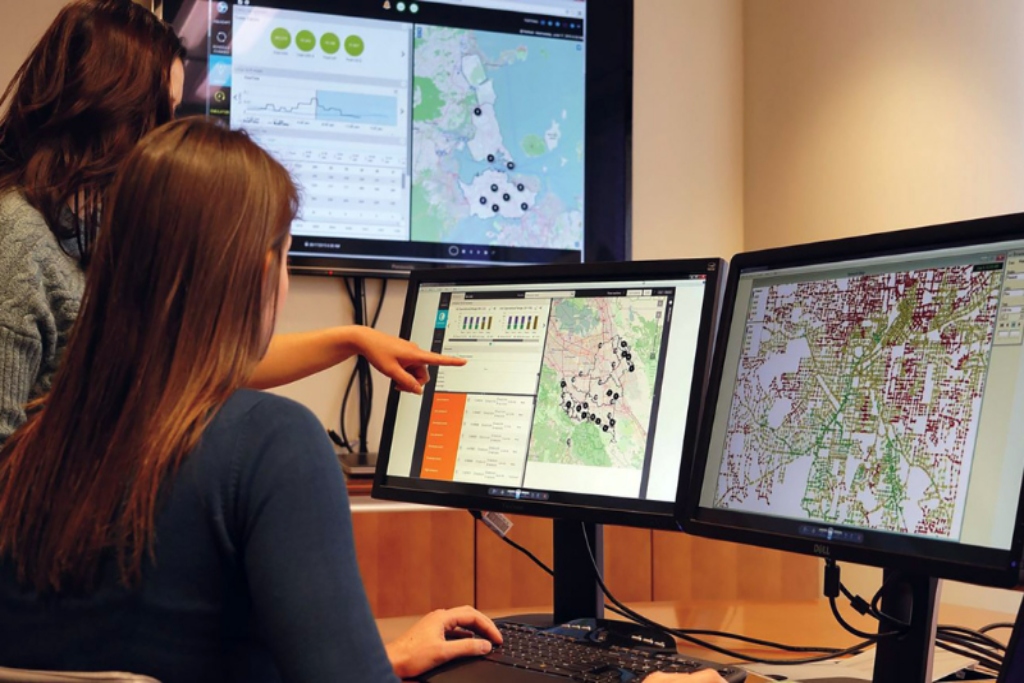
Geographic Information System (GIS) Operations has emerged as one of the most in-demand career fields in today’s data-driven and location-aware world. From urban planning and environmental monitoring to telecom networks and disaster management, GIS operations play a crucial role in decision-making across industries. As organizations increasingly rely on spatial data, the demand for skilled GIS professionals continues to grow.
This blog provides a complete overview of GIS Operations careers, including job roles, required skills, industries, salary expectations, and future scope—making it an ideal guide for job seekers and fresh graduates.
What is GIS Operations?
GIS Operations refers to the practical application, management, and analysis of geographic data using GIS software and tools. It involves collecting spatial data, maintaining databases, creating maps, performing spatial analysis, and supporting business or government operations with location-based insights.
GIS operations professionals ensure that spatial data is accurate, up to date, and effectively used to solve real-world problems. Their work supports planning, logistics, infrastructure development, environmental protection, and public safety.
Why Choose a Career in GIS Operations?
A career in GIS Operations offers a unique combination of technology, data analysis, and real-world impact. Unlike traditional desk jobs, GIS professionals work with data that directly influences cities, transportation, utilities, climate research, and more.
Key reasons to choose GIS Operations as a career include:
- Growing global demand for GIS professionals
- Opportunities across multiple industries
- Strong integration with data science and AI
- Competitive salaries and long-term stability
- Meaningful work with real societal impact
Popular Job Roles in GIS Operations
GIS Operations offers a wide range of job profiles suitable for entry-level to experienced professionals.
GIS Analyst
Responsible for analyzing spatial data, creating maps, and generating reports to support decision-making.
GIS Technician
Focuses on data collection, digitization, map updates, and database maintenance.
GIS Operations Executive
Handles day-to-day GIS workflows, quality checks, and coordination with project teams.
Spatial Data Analyst
Combines GIS with statistical analysis to interpret complex spatial patterns.
GIS Project Coordinator
Manages GIS projects, timelines, client communication, and deliverables.
Remote Sensing Analyst
Works with satellite imagery and aerial data to support GIS operations.
Skills Required for GIS Operations Jobs
To succeed in GIS Operations, candidates must develop both technical and analytical skills.
Technical Skills
- GIS software (ArcGIS, QGIS, MapInfo)
- Spatial data analysis and mapping
- Database management (PostGIS, SQL)
- GPS and surveying basics
- Remote sensing fundamentals
- AutoCAD and geospatial tools
Analytical and Soft Skills
- Problem-solving ability
- Attention to detail
- Data interpretation skills
- Communication and reporting
- Project coordination
- Time management
Having knowledge of Python, R, or data visualization tools is an added advantage and improves employability.
Educational Qualifications for GIS Operations
Most GIS Operations roles require one of the following qualifications:
- Bachelor’s degree in Geography, GIS, Geomatics, or Environmental Science
- Diploma or certification in GIS & Remote Sensing
- Engineering background with GIS specialization
- Postgraduate degree in Geospatial Technology
Short-term GIS certification courses also help freshers and career switchers enter the field quickly.
Industries Hiring GIS Operations Professionals
GIS Operations professionals are hired across diverse sectors, making it a flexible career option.
Government & Urban Planning
Smart cities, land records, municipal planning, and public infrastructure projects.
Telecom & Utilities
Network planning, fiber mapping, and asset management.
Environmental & Climate Research
Forest mapping, climate change analysis, and disaster management.
Transportation & Logistics
Route optimization, traffic analysis, and supply chain planning.
Real Estate & Construction
Site analysis, land surveys, and feasibility studies.
IT & Consulting Firms
GIS data services, analytics, and enterprise GIS solutions.
Salary Expectations in GIS Operations
Salaries in GIS Operations vary based on skills, experience, and location.
- Entry-level (0–2 years): Moderate salary with strong learning opportunities
- Mid-level (3–6 years): Competitive salary with project responsibilities
- Senior & Lead Roles: High-paying positions with strategic and managerial roles
Professionals with advanced GIS skills, programming knowledge, and domain expertise can command significantly higher salaries.
Future Scope of GIS Operations Careers
The future of GIS Operations is extremely promising. With the rise of smart cities, AI-powered mapping, autonomous vehicles, and climate analytics, GIS is evolving beyond traditional mapping.
Emerging trends include:
- Integration of GIS with Data Science and AI
- Real-time spatial analytics
- 3D GIS and digital twins
- Cloud-based GIS platforms
- Location intelligence for businesses
These advancements ensure long-term career growth and continuous learning opportunities.
How to Start a Career in GIS Operations
If you are planning to enter GIS Operations, follow these steps:
- Learn GIS fundamentals through courses or certifications
- Practice using industry-standard GIS software
- Build a portfolio with maps and projects
- Apply for internships or entry-level roles
- Keep upgrading skills with programming and analytics
Consistency and hands-on practice are key to success in this field.
Conclusion: Is GIS Operations a Good Career Choice?
GIS Operations is an excellent career choice for individuals interested in geography, data, and technology. It offers job security, cross-industry opportunities, and a chance to work on impactful projects. With continuous technological advancements and increasing demand for spatial data, GIS Operations will remain a valuable and future-proof career path.
For job seekers looking to build a stable and meaningful career, GIS Operations is a smart and rewarding option.