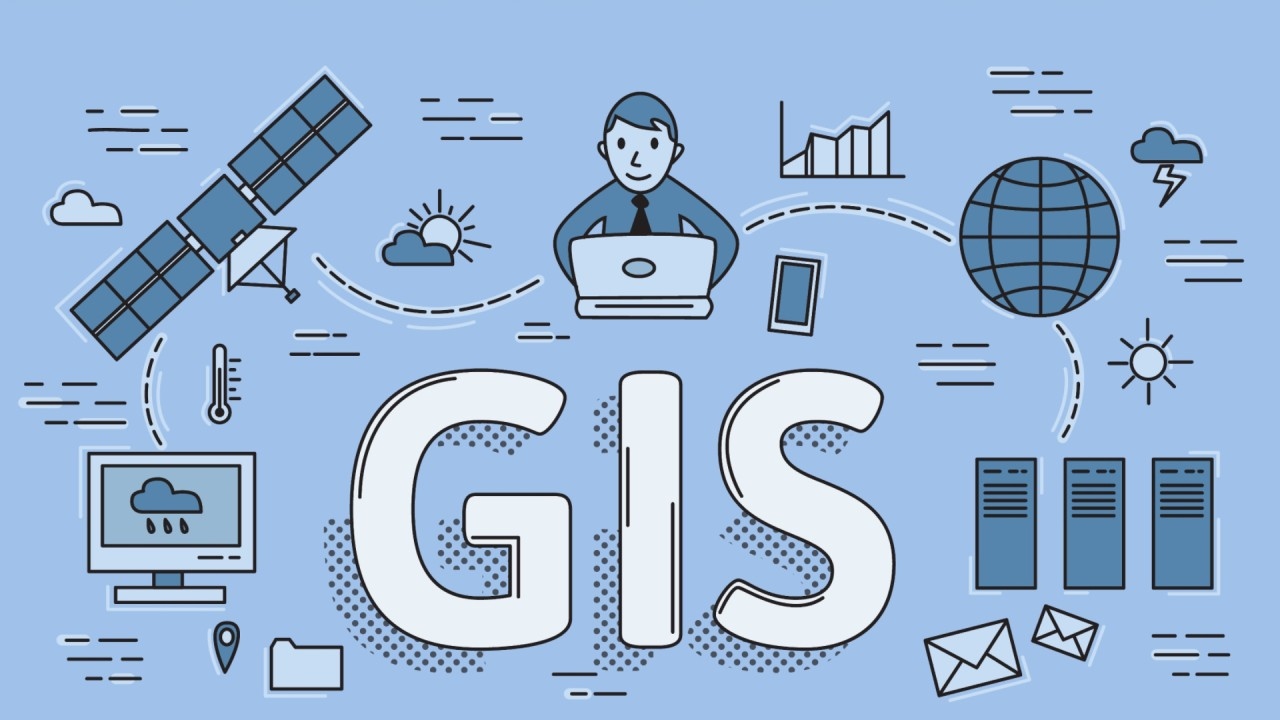
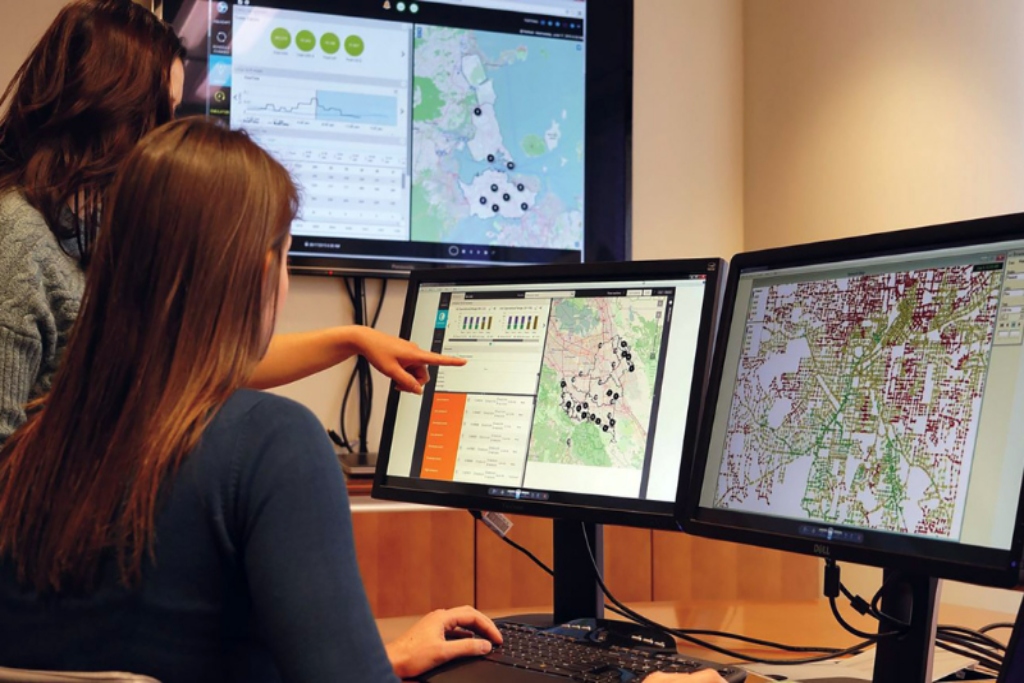
As we move through 2026, the field of Geographic Information Systems (GIS) has transitioned from a niche mapping tool into the backbone of global decision-making. From managing climate resilience to optimizing autonomous delivery routes, GIS Operations are now central to both government and private sectors. For job seekers, this shift means that “making maps” is no longer enough; the modern GIS professional must be a data scientist, a programmer, and a spatial strategist all in one.
In this guide, we explore the evolving landscape of GIS jobs, the technical “skill-stack” required for 2026, and how you can position yourself for high-paying roles in this booming industry.
1. The Shift from GIS Technician to Spatial Data Scientist
Traditional GIS roles often focused on digitizing paper maps or basic data entry. In 2026, these tasks are largely automated by AI-driven feature extraction. The industry now demands GIS Analysts and Specialists who can interpret complex patterns.
- Geospatial AI (GeoAI): Machine learning is now used to predict urban growth or identify deforestation in real-time. If you can bridge the gap between GIS and Machine Learning, you become an invaluable asset.
- The “Digital Twin” Era: Urban planning now relies on 3D Digital Twins—virtual replicas of entire cities. Professionals who can manage these massive, real-time datasets are seeing a 15-20% salary premium compared to traditional cartographers.
2. Essential Technical Skill-Stack for 2026
To stand out in our job listings, your resume must reflect more than just “Proficiency in ArcGIS.” The modern recruiter is looking for a cross-disciplinary toolkit:
| Category | Must-Have Skills for 2026 |
| Software | ArcGIS Pro, QGIS, Global Mapper, and Esri StoryMaps. |
| Programming | Python (for automation), SQL (for spatial databases), and R (for geostatistics). |
| Cloud Platforms | ArcGIS Online, Google Earth Engine, and AWS Cloud Storage. |
| Data Types | LiDAR processing, Satellite Imagery (Remote Sensing), and IoT real-time feeds. |
3. High-Growth Sectors Hiring GIS Professionals
While government roles (urban planning and environmental protection) remain steady, three new sectors have emerged as the largest employers in 2026:
- Renewable Energy: GIS is critical for siting wind farms and solar arrays, analyzing sun exposure, and managing grid integration.
- Logistics & Supply Chain: With the rise of autonomous drones and vehicles, spatial routing and “Last-Mile” delivery optimization have become high-stakes GIS operations.
- Public Health & Telehealth: Spatial epidemiology—tracking disease outbreaks and optimizing the location of health clinics—is seeing massive investment globally.
4. Salary Expectations and Career Pathing
The financial outlook for GIS professionals is stronger than ever. In the United States, the average salary for a GIS Analyst in 2026 is approximately $75,010, while senior Database Architects or GIS Managers can easily exceed $130,000.
In India, the GIS market is expanding rapidly within Global Capability Centres (GCCs), with mid-level salaries ranging from ₹10 LPA to ₹22 LPA for those with specialized skills in cloud architecture or GeoAI.
How to Climb the Ladder:
- Entry-Level (GIS Technician): Focus on data accuracy, topology, and basic map production.
- Mid-Level (GIS Analyst/Specialist): Master Python scripting to automate workflows.
- Senior-Level (GIS Architect/Manager): Focus on system integration, cloud migration, and leading multi-disciplinary teams.
5. Mastering the GIS Interview: Beyond the Portfolio
In 2026, recruiters aren’t just looking at your maps; they are looking at your problem-solving logic. When you apply for a role via our portal, be prepared to answer:
- “How would you handle a dataset with inconsistent coordinate systems from three different sources?”
- “Can you explain a complex spatial analysis to a non-technical stakeholder?”
Pro Tip: Always maintain a “Live Portfolio.” Instead of a static PDF, use ArcGIS StoryMaps or a personal GitHub repository to showcase your code and interactive web maps. This proves you understand how to deliver insights, not just data.
Conclusion: Why GIS is a “Future-Proof” Career
As the world faces challenges like climate change and rapid urbanization, the demand for people who can “think spatially” will only grow. GIS operations provide a unique career path that combines environmental impact with high-tech innovation. Whether you are a student or a professional looking to pivot, there has never been a better time to enter the geospatial field.